Münsterschwarzach Abbey is a Benedictine monastery with about 350 employees, a wide range of operations—and, until recently, no digital system for technical building management. When Arnold Rumpel took on the newly created position, he encountered traditional paper-based filing systems and the challenges they presented in his day-to-day work. They were looking for a solution that was simple enough to actually be used in everyday life, yet powerful enough to map the monastery’s complex processes in a structured way. With Wowflow, they were able to take exactly that step.
- Why other CAFM software was too big, too expensive, and too complex for the monastery
- How Wowflow Gained Acceptance Even Among Technologically Skeptical Employees
- And why the Benedictine principle of sustainability and Wowflow make a surprisingly good pair
Read how a centuries-old monastery proves that digitization isn’t a matter of industry—but of finding the right solution.
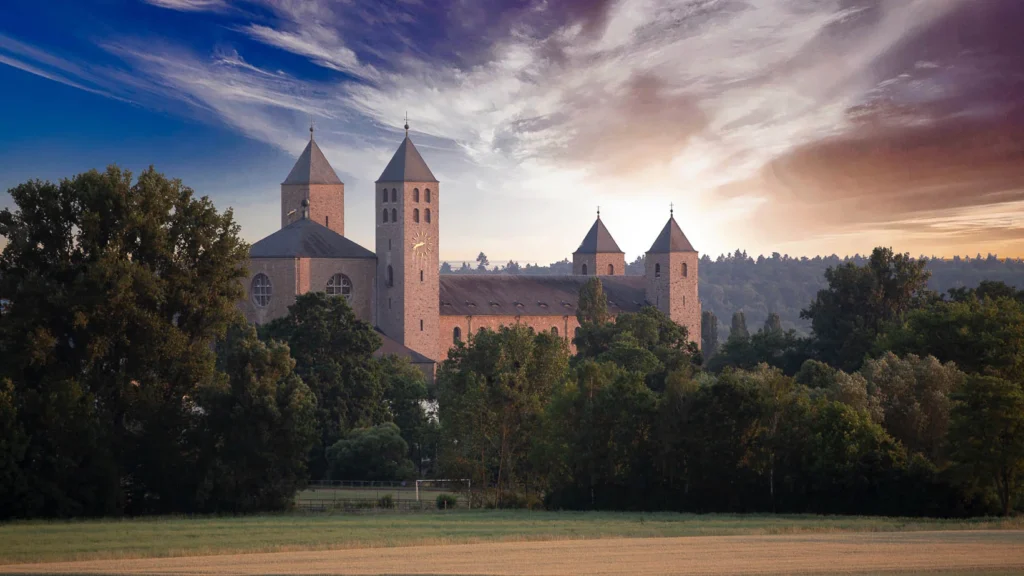
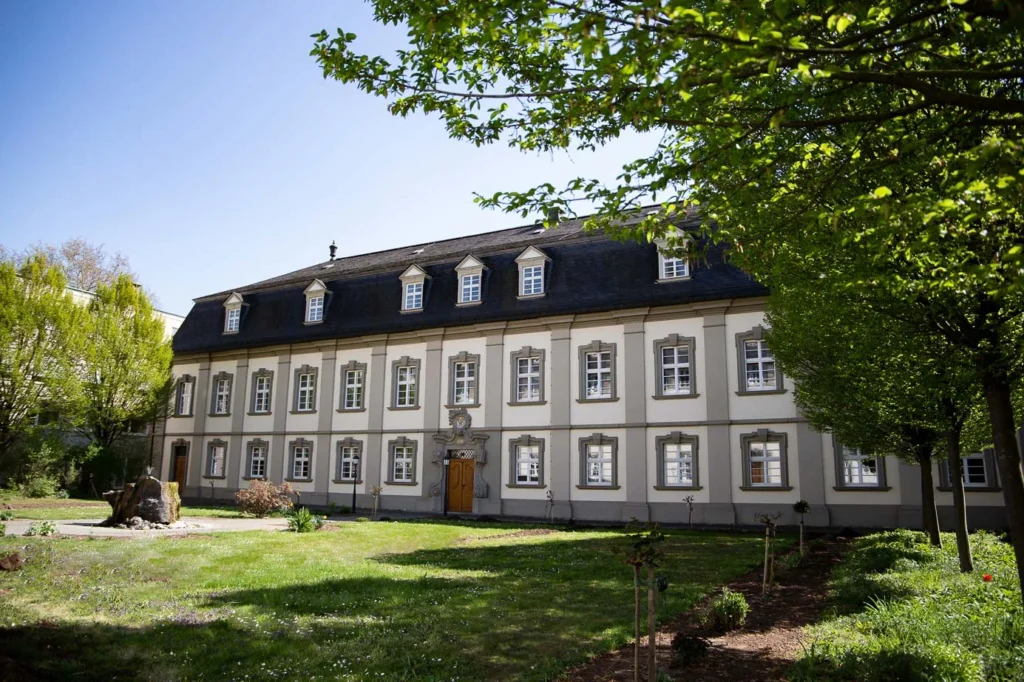
Münsterschwarzach Abbey is a Benedictine monastery in the Franconian Schwarzach Valley near Würzburg, with a history dating back more than 1,200 years. Today, the abbey is much more than just a place of worship: With approximately 350 employees, it operates a guesthouse, a high school, a printing press, a publishing house, a bakery, a butcher shop, and other businesses. The community welcomes up to 1,000 visitors daily and thus faces the same organizational challenges as any medium-sized company.
Monastic Enterprises
On Filing Cabinets and Notes: How a Monastery Had to Get By Without an Organized System
When Arnold Rumpel took over the newly created position in technical building management at Münsterschwarzach Abbey in April of last year, he did not find a well-organized handover waiting for him. What he encountered was a scene familiar to many who work in institutions steeped in tradition: classic construction offices with massive filing cabinets, plans stored in analog cabinets, and documents accumulated over decades.


The monastery sees a large number of staff and visitors every day. The sheer volume of facilities, maintenance schedules, inspection regulations, and repair requests that this entails would have been simply impossible to manage without digital support. Particularly critical: Some inspection deadlines had simply been overlooked, and without a centralized system, there was no way to identify this in a timely manner.
Arnold Rumpel quickly realized that things couldn’t go on like this:
Added to this was the everyday problem of missed reports: An electrician receives a call while on the go about a light bulb failure, but by the time he gets back to the office, the job has long been forgotten. Or a technician is in the middle of working on a distribution panel and is expected to take a new repair request over the phone at the same time.
Arnold Rumpel describes the situation as follows:
Arnold Rumpel began looking for a solution: He searched online, checked with the Chamber of Crafts, and spoke with colleagues. The market offered many options—but none that were quite right.
Simple, logical, affordable: Why Wowflow succeeded where large CAFM solutions failed
The monastery is not a corporation. The staff are craftsmen, not software experts. And the budget of a Benedictine monastery is quite different from that of a facility management service provider with hundreds of properties. These three realities defined Arnold Rumpel’s requirements profile and created a clear picture of what a solution had to deliver.
He tested several programs, including traditional CAFM solutions. He was quickly disillusioned: too many features, too high a cost, and too complicated to use.
The basic principle was clear: The solution had to be logically structured, work on mobile devices, and not require hours of training. Tradespeople want to be able to follow the steps without getting lost in menus.
Wowflow offered exactly that. The deciding factor at first was the ability to test the program for free —and to ask questions at any time. For someone who describes himself as “more of a handyman than a computer person,” that was more than just a nice feature: it was proof of trust.
Price was also a factor: Large-scale CAFM solutions, priced for corporate groups, aren’t a good fit for a monastery with 350 employees. Wowflow offers the right balance between performance and cost.
The rollout wasn’t without resistance, but that’s part and parcel of any digital transformation in traditional institutions. In a joint meeting, Arnold Rumpel explained the specific issues to the team, demonstrated Wowflow, and made a simple suggestion: try it out and then evaluate it together.
But in the end, Wowflow’s simple, intuitive logic won us over precisely where arguments alone would not have been enough.
Nothing is lost, everything becomes visible: Wowflow as the foundation for mindful stewardship in everyday monastic life
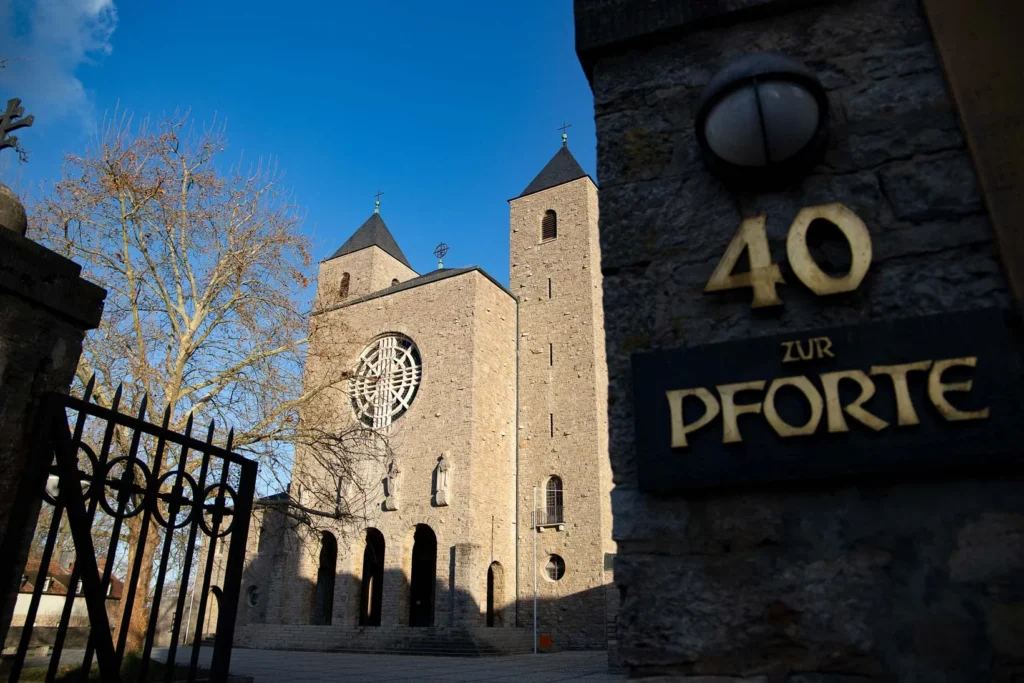
Since the introduction of Wowflow, daily life at Münsterschwarzach Abbey has changed noticeably—not through a revolution, but through what Arnold Rumpel most aptly describes with a single word: contentment.
The most important tool for him is the maintenance module. Inspection requirements that used to be overlooked are now fully documented in the system. Nothing is overlooked anymore.
Something fundamental has changed for the employees as well: for the first time, they can see what they accomplish each day. Anyone who has processed ten reports can see that at the end of the day—in black and white. In the past, a full day’s work often felt invisible: a lot of running back and forth, many small tasks completed, but no overall picture.
For the monastery’s clients—the guesthouse, the high school, and the businesses operated by Vier-Türme-GmbH—Wowflow means this: Anyone who submits a report knows it won’t get lost. No duplicate calls, no reminder emails, no uncertainty. And if a room in the guesthouse is reported multiple times for the same issue, it’s now visible and can be permanently resolved.
What stands out in particular is that Wowflow aligns with an attitude that is already part of daily life at the monastery. The Benedictine Rule stipulates that everything entrusted to us—from people to buildings to technology—must be treated with care. The monastery’s tools and possessions are to be treated as sacred vessels. This fosters a culture of repair and longevity rather than a throwaway mentality. Anyone who walks past a broken door closer takes a photo and forwards it—not because it’s required, but because it’s second nature. Wowflow provides a structure for this mindset.
In this sense, Wowflow is not an outsider in monastic culture, but rather a tool that enables precisely what the Benedictine tradition has called for for centuries: responsibility, a clear overview, and the careful stewardship of what has been entrusted to us.
Wowflow’s support has also been impressive. Even after the launch, Arnold Rumpel has never been left on his own: “I can call almost anytime, and I always get help. So it’s been a very positive experience.”
Is Wowflow the right facility management software for monasteries?
Monasteries aren’t typical businesses, but they face many of the same challenges: external staff, a variety of buildings, maintenance responsibilities, internal customers, and an organizational structure that requires clear processes. Arnold Rumpel agrees.
At the same time, he’s honest: Whether Wowflow is the right fit for a particular monastery is not something that can be decided from the outside. Every institution has its own structure, its own processes, and its own staff.
As of today: satisfied customers, satisfied employees. And a system that is being expanded step by step. That is Rumpel’s personal goal: to have all technical equipment fully entered into the system, all maintenance cycles thoroughly documented, and all colleagues fully integrated into the system. The foundation for this has been laid.
Your organization can take this step, too
Whether it’s a historic monastery, a medium-sized company, or a growing facility management service provider: Anyone who still manages maintenance, reports, and tasks using analog methods or a patchwork of tools loses time, loses track of things, and compromises quality every day.
Münsterschwarzach Abbey proves that digitization doesn’t require complex software. It just needs the right one.
Try Wowflow for free now.